Skip to main content
DIET
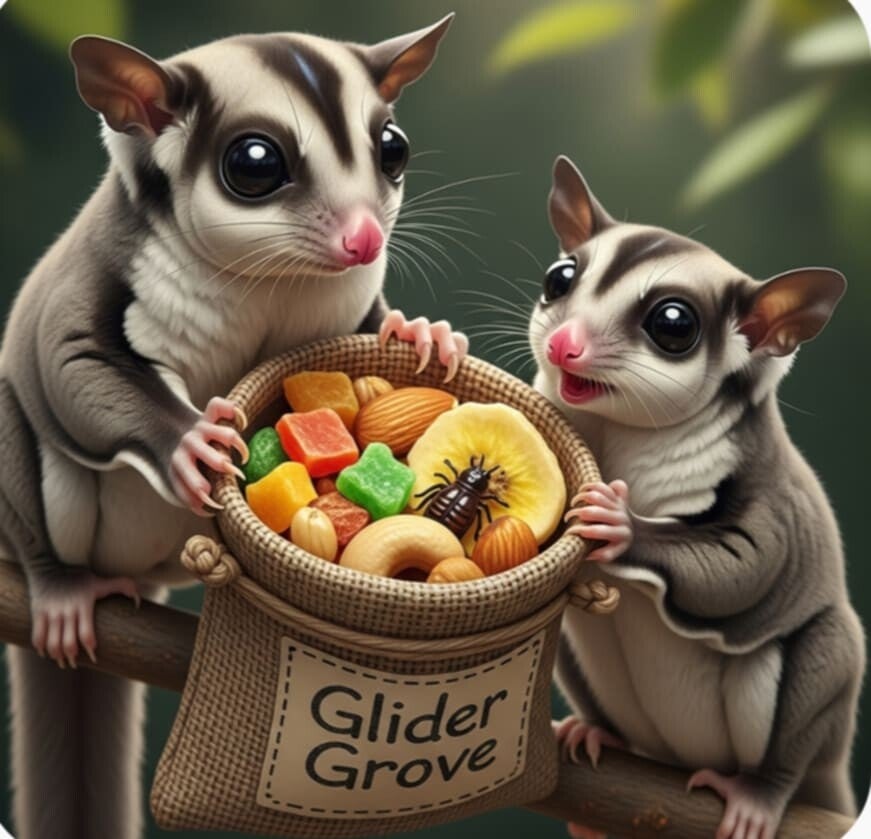
In the wild, sugar gliders feed on tree sap, nectar, and insects. In captivity, they require a varied diet that includes fresh fruits and vegetables and protein from various sources (primarily insects). Fresh water must be available at all times.
Feeding Your Sugar Glider
Acceptable Food Items
-
Commercial diets prepared for sugar gliders
-
Artificial nectar mix.
-
Fruits (including dried) and Vegetables.
-
Insects (mealworms, crickets)
-
Other protein (meat such as cooked turkey or chicken, boiled eggs).
-
Occasional treats.
Potentially Dangerous Food Items
-
Candy or chocolate
-
Canned fruit
-
Nuts and seeds (can be fed as an occasional treat)
-
Crickets raised on corn mash, outdoor insects
-
Raw meats or eggs
Specially formulated mixtures for sugar gliders have been developed and are available in exotic pet stores or on the internet. However, most of these are meant to be fed as part of a varied diet and should not be relied on as the only food source. Artificial nectars that mimic the sap and nectar that sugar gliders eat in the wild should account for about half of the diet. The other half of the diet can be a mix of commercial pellet diets made for sugar gliders, live insects treated with extra calcium, and small amounts of fruits, and vegetables.
Sugar gliders are adaptive omnivores that have different food targets throughout each season. They primarily forage along the underside of the forest canopy, so they have access to a wide diversity of dietary options.
The diet should also include appropriate vitamins and mineral supplements. Your veterinarian can recommend suitable diets and supplements and provide directions on their usage.
Fat intake should be kept to a minimum. Nuts should be provided only as an occasional treat because they are high in fat and protein, and sugar gliders will often eat them to the exclusion of healthier foods. DO NOT use canned fruit because of the preservatives and refined sugars in these products. Pits of fruits are also poisonous to sugar gliders. Small quantities of dry cat food can be fed as a source of protein if insects are unavailable. However, cat food should only be used until a supply of insects can be obtained; feeding cat food to sugar gliders in large amounts or over an extended period may lead to medical problems.
It is important to thoroughly wash raw food items with fresh water before giving them to your pet to reduce the chances of exposure to various intestinal parasites that can cause diarrhea and vomiting.
Diets should contain a daily protein source—a commercial extruded protein pellet, mealworms, crickets, or small amounts of cooked skinless chicken. Use of a balanced calcium/phosphorus supplement with vitamin D3 and a multivitamin supplement can help prevent nutritional diseases.
They can eat almost 10 percent of their body mass in food each day. Sugar gliders are also capable of entering a state of torpor that allows them to slow down basic body functions in order to conserve energy.
What Do Sugar Gliders Eat?
Insect species and their larvae are their biggest food source during the warmer months of the year. Sugar gliders exhibit remarkable speed and dexterity when they leap from trees momentarily to capture flying insects. They seek out the gum or sap exuded from trees during the cold season, particularly that of the acacia and eucalyptus plants. They are also known to prey on small animals, particularly reptiles, that they come across in their foraging expeditions.