Skip to main content
WHAT IS A SUGAR GLIDER
A sugar glider is a small, nocturnal marsupial native to Australia, New Guinea, and parts of Indonesia.
Sugar Gliders scientific name is Petaurus breviceps. They are tree dwellers that belong to the order of animals that carry their babies in pouches in their stomachs. Kangaroos, koalas, opossums, bandicoots, and wombats are also marsupials.
They are about 24–30 cm long including their tail. They usually weigh 100–160g.
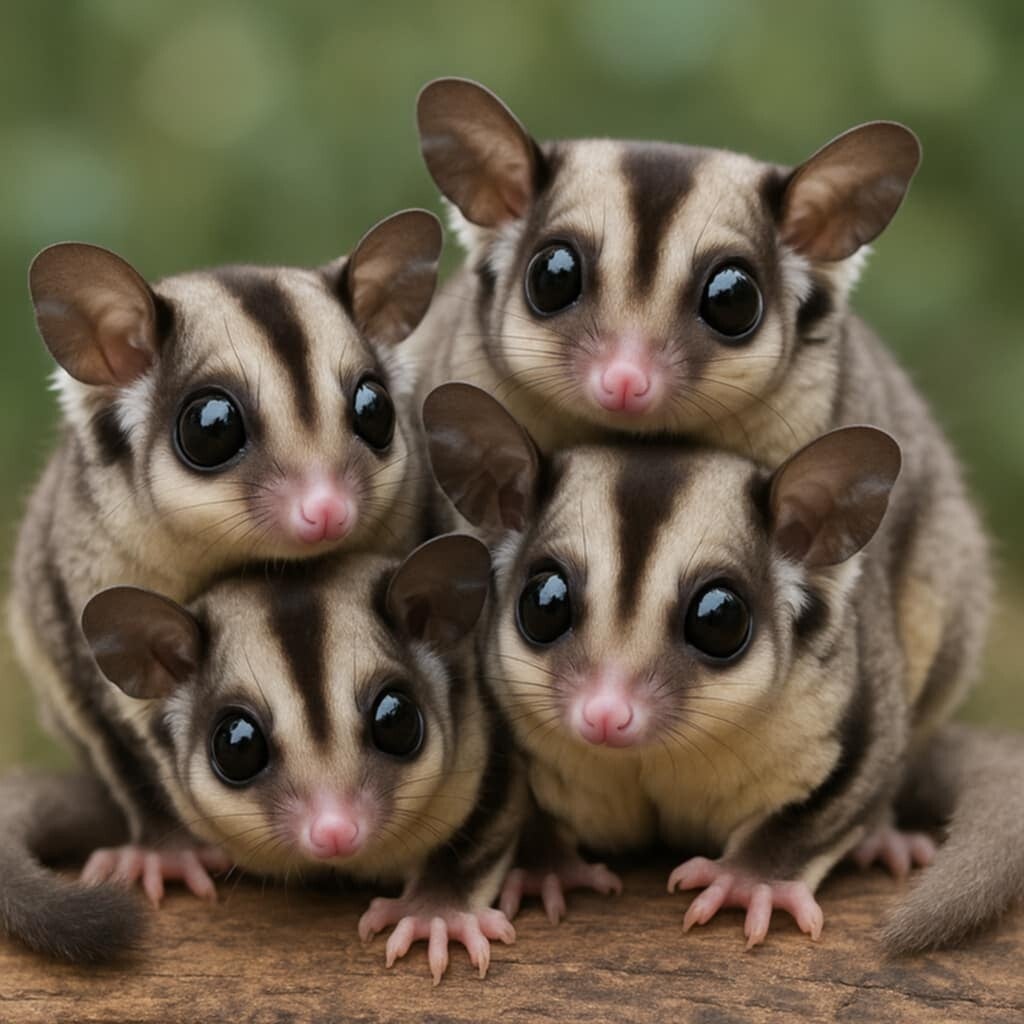
They have large eyes for night vision, a soft grey coat with a dark stripe down the back, and a long bushy tail. Female sugar gliders have stomach pouches in which the young develop. Mature males have a scent gland on the forehead that looks like a bald spot. They have a similar scent gland on the throat and near the base of the tail, which they use to mark each other and their territory. Males weigh 4 to 6 ounces (110 to 160 grams), and the slightly smaller females weigh 3 to 5 ounces (85 to 140 grams).
Like flying squirrels, they have a thin membrane of skin called the patagium), which stretching from their wrists to their ankles. These gliding membranes stretch from the wrists to the ankles. Sugar gliders can glide up to 164 feet (50 meters) using their tails to steer and balance. Sugar gliders can also exercise control over their long tail to maintain balance in the treetops and steer them during a glide.
Sugar Gliders are Omnivores, which means they eat nectar, sap, insects, fruits, and vegetables. Their name comes from their love of sweet foods like tree sap and nectar.
Sugar Gliders are highly social, they live in groups and communicate with a range of vocalisations. In captivity, they need lots of social interaction to stay healthy.
They can live 5–7 years in the wild, but up to 10–15 years in captivity with proper care.